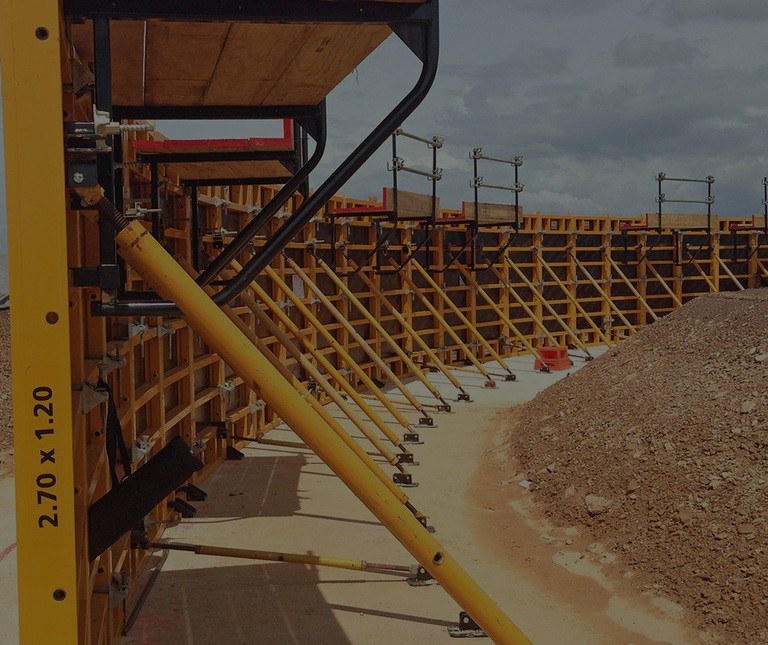
Today, the monolithic construction industry uses removable and permanent forms of formwork. The first type of formwork is used for multi-storey housing construction. For its manufacture, special panels of plywood or metal of various shapes and parameters are mounted, which are connected according to the project. Such panels are ready to withstand more than 100 cycles of pouring concrete. Fixed formwork consists of two panels made of expanded polystyrene or other material, which are connected with jumpers to the block. This type of formwork, after pouring the concrete mixture into it, is an integral part of the building structure, therefore it is used only once. Fixed formwork is relevant for the construction of houses and small-scale projects.
The most environmentally-friendly form of fixed formwork
Today, non-removable fiberboard formwork is widely used in monolithic technology. This building material is a mixture of wood chips mixed with Portland cement or caustic magnesite. Fibrolite is characterized by the following advantages:
- ease, which reduces the cost of construction work;
- biological resistance;
- resistance to burning;
- no condensation can be formed inside the structures with this material, which increases the life of the structure;
- excellent indicators of strength, earthquake resistance, frost resistance, sound insulation, and energy-saving.
This building material is multifunctional and environmentally friendly for humans and the environment.
It should be noted that non-removable polystyrene formwork is also used for construction using monolith technology. But, based on the data of experimental studies, the toxicity of expanded polystyrene belongs to the class of hazardous materials, as it interacts with oxygen and produces benzene, formaldehydes, methyl alcohol, and other dangerous substances. This material forms a large amount of smoke while burning, which is dangerous even at a great distance from the source of ignition.


